47DOOR 47 LTD

About Us

A company organised around how software is actually maintained

DOOR 47 LTD is an IT company working in software engineering, system architecture, cloud delivery and integration. This page describes how we work and what we hold ourselves to.

01Introduction

What DOOR 47 LTD does

DOOR 47 LTD builds and maintains software systems: custom applications, web applications, integrations between existing tools, and the cloud environments those systems run in. The work ranges from designing a system from a blank page to taking over something that has become difficult and expensive to change.

We are an engineering company rather than an agency. That distinction matters in practice: the people who make architectural decisions are the people who write and operate the code, and the artefacts we produce are aimed at whoever maintains the system next.

We publish only what we can stand behind. You will not find invented statistics, client logos or awards on this website — the description of our practice is the claim.

02Mission and vision

Mission

To build software that organisations can rely on and continue to change: systems whose behaviour is understood, whose costs are visible, and whose maintenance does not depend on the availability of a single supplier. We measure our work by how easily someone else can pick it up.

Vision

A working practice in which technical decisions are documented, reversible and open to review — where modernisation is a continuous, low-drama activity rather than a periodic rescue project, and where the people funding a system understand the trade-offs they are paying for.

03Values

Honesty about uncertainty

When we do not know how long something will take, we say so and describe what would reduce the uncertainty.

Respect for existing work

Systems we inherit were built under constraints we did not face. We study them before judging them.

Ownership

The person who builds a component is responsible for its tests, its documentation and its behaviour in production.

Restraint

Fewer moving parts, fewer dependencies and fewer abstractions than the problem seems to invite.

Precision in language

Ambiguous requirements produce ambiguous software. We write definitions down until they stop being negotiable.

Long-term thinking

A decision that saves a week now and costs a quarter later is not a saving.

04Engineering philosophy

Software is a long conversation with people you will never meet

Most of the cost of a system appears after the first release. That single observation shapes almost every technical choice we make: conventional technology over novel technology, explicit code over implicit magic, boring data models over flexible ones that nobody can query.

We design boundaries first. Deciding which component owns which data, and what each one promises to the others, removes most of the coupling that makes later change expensive. Interfaces are written down as contracts and versioned when they move.

Failure is part of the specification. Timeouts, retries, idempotent operations, partial degradation and recovery procedures are designed with the feature, because distributed systems fail continuously in small ways.

Finally, we optimise for legibility. A junior engineer reading a module for the first time should be able to predict what it does. If that is not true, the module is not finished.
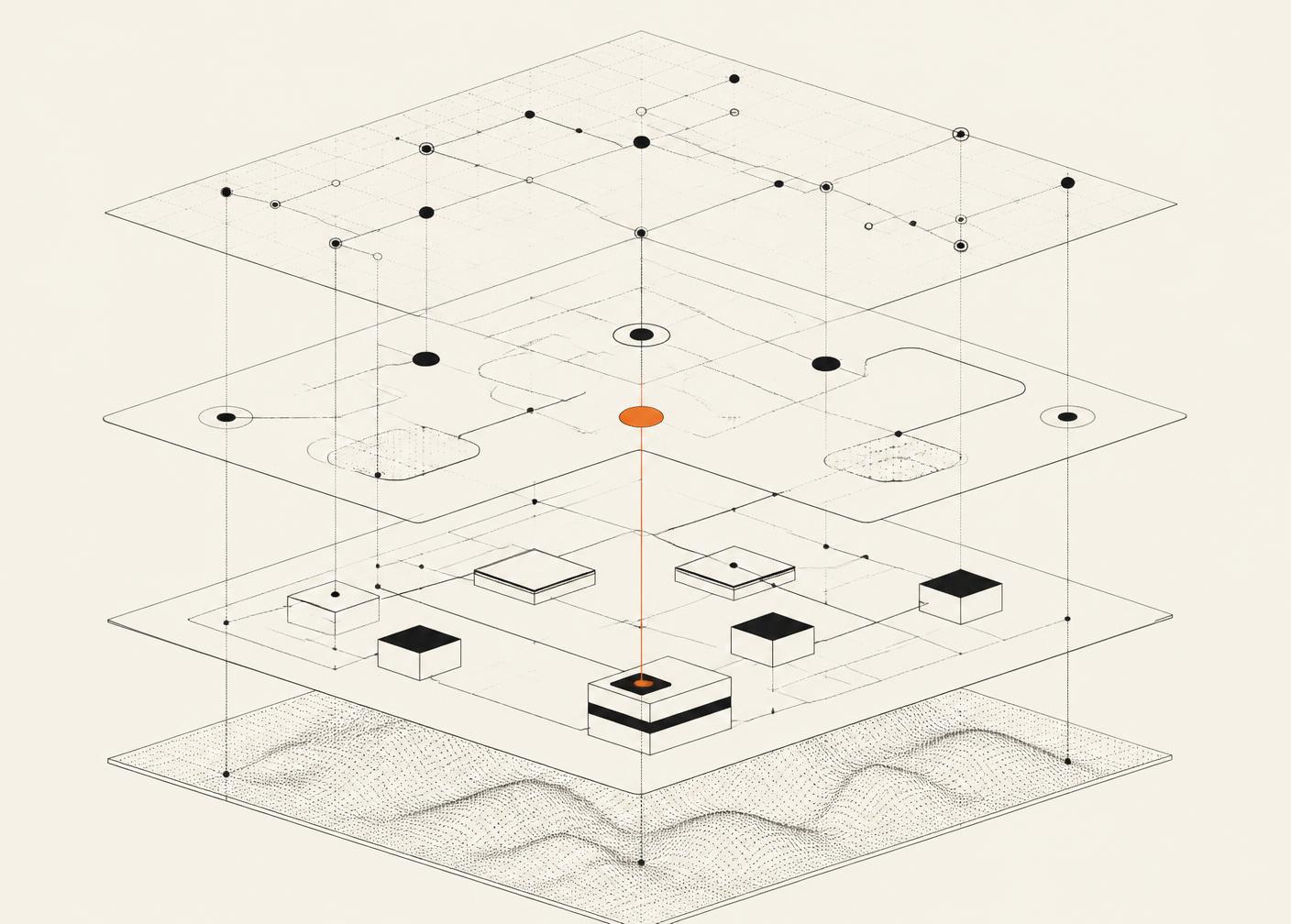
Line illustration of a layered software architecture with data flowing between planes
Boundaries decided before implementation

05Collaboration

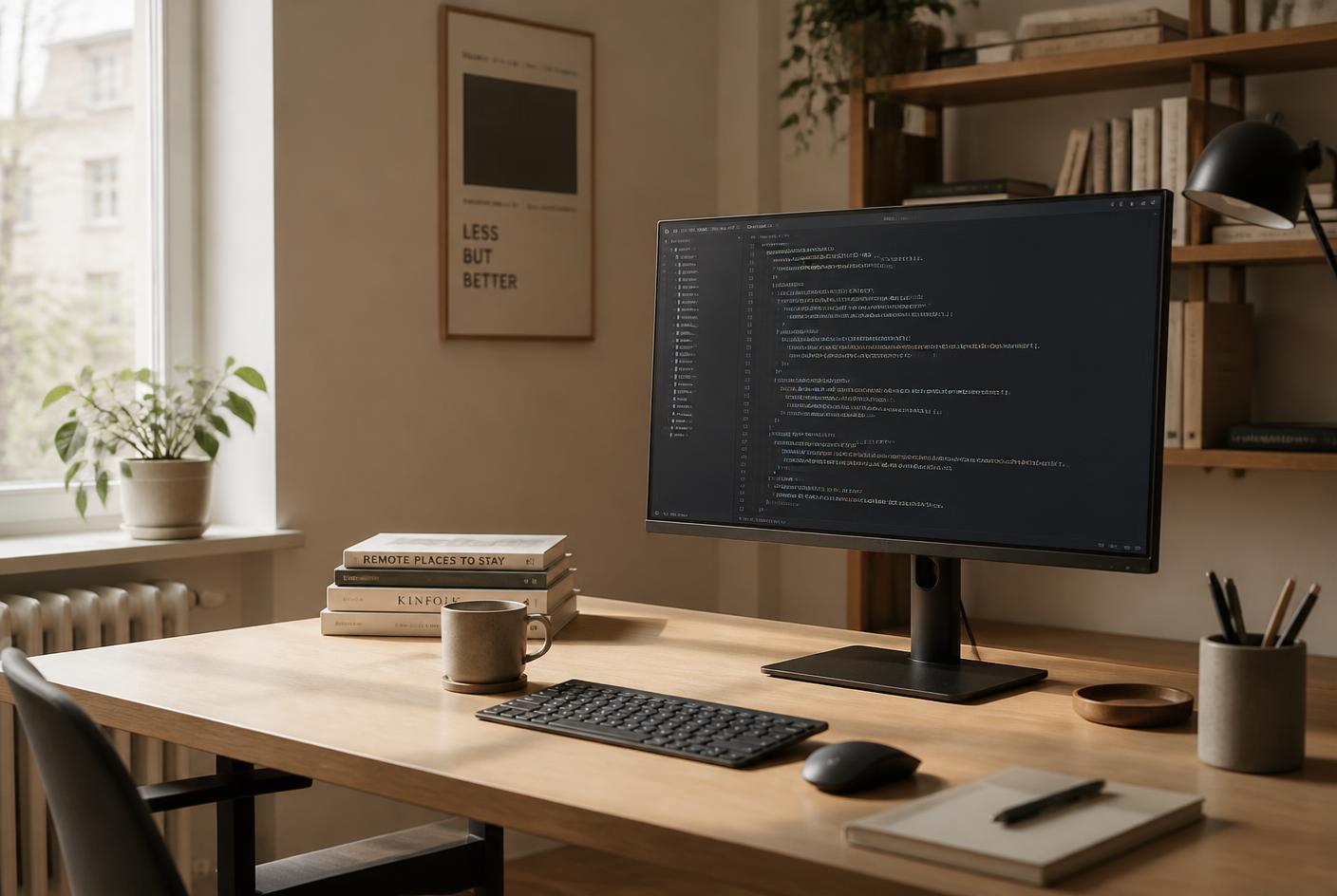
Workspace with a monitor showing source code, notebook and keyboard in daylight
Written communication over status theatre

How we work with your team

  • One technical counterpart

    We ask for a single person on your side who can answer questions about the domain and make decisions. Progress is limited by decisions, not by code.

  • Written decisions

    Anything agreed in a call is summarised in writing. If it is not written down, it is not agreed.

  • Short cycles

    Work is broken into increments that can be reviewed in days, so direction can change before it becomes expensive.

  • Visible work

    Repositories, pipelines, issue tracking and environments are shared from the beginning, not presented at the end.

  • Your engineers included

    Where you have an internal team, they review our changes and we review theirs. Handover then requires no event.

06Quality standards

What we mean by quality

Definition of done
A change is done when it is implemented, tested, reviewed, documented and deployable — not when it works locally.
Automated verification
Type checks, unit tests, integration tests and pipeline gates run on every change.
Code review
Every change is read by a second engineer, with architecture, naming and failure handling in scope.
Traceability
Requirements, decisions and changes are linked so that behaviour can be explained months later.
Performance budgets
Response times, payload sizes and query costs are treated as requirements, not observations.
Operational readiness
Logging, metrics, alerts and recovery procedures exist before a system carries real traffic.

07Responsible technology

Responsible technology principles

Collect less. We help define the minimum data a system needs to do its job, and we question fields that exist only because they might be useful later.

Make processing explainable. Where software makes decisions that affect people, the inputs and rules behind those decisions should be inspectable rather than buried in code.

Design for accessibility. Keyboard operation, contrast, semantic structure and readable typography are treated as requirements in every interface we build.

Keep the exit open. Data export, documented interfaces and portable infrastructure definitions mean you can leave any supplier, including us.

Use resources deliberately. Efficient queries, right-sized environments and honest cost reporting reduce both spend and energy use.

08Contact details

Contact details

Company
DOOR 47 LTD
Domain
door47.com